Car Stalled in Floodwater in Riyadh: What to Do
The first heavy rain floods Riyadh's underpasses and low streets. If your car stalls in the water, the second attempt to start it is what ruins the engine. Here is what to do instead.
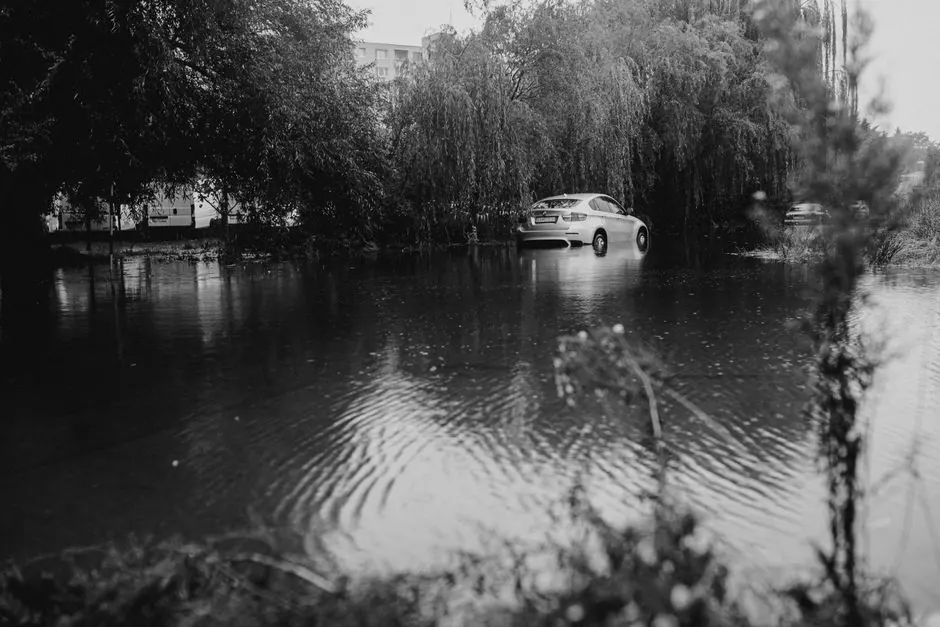
If your car stalls in floodwater in Riyadh, do not try to start it again under any circumstances, because water may have entered the engine and any attempt to crank it can break it from the inside. Leave the car and move to higher ground if the water is rising, then once it has drained away, photograph the car, disconnect the battery and have it carried on a flatbed to a workshop that checks it before any restart.
Riyadh does not get much rain, but when it rains hard, water collects quickly in underpasses, low streets and wadis. This guide explains what to do during and after a flood, why the second start attempt is what turns a simple problem into a dead engine, and how to protect your position with your insurer.
Hydrolock is a failure that happens when water enters the engine's cylinders through the air intake, and because water does not compress like air, the pistons hit it and can bend the connecting rods or crack the engine.
Car stalled in water: what is the safe first step?
When your car stalls in floodwater in Riyadh, your safety comes before the car. Follow these steps in order:
- Do not press the start button or turn the key again.
- Switch on the hazards if the electrics still work, so drivers behind can see you.
- If the water is rising or flowing, open the door or window and get out straight away, before the pressure on the door increases.
- Walk against the current to the nearest pavement or high ground, watching for drain openings hidden under the water.
- Contact Civil Defense if anyone is trapped or the water is moving fast.
- Wait until the water has drained before going back to the car.
If the water is still, shallow and not dangerous, you can stay in the car for a while and call a tow, but any movement of the water or steady rise means get out immediately.
Why must I never restart an engine that stalled in water?
Restarting an engine that stalled in water is forbidden because it usually stopped when water got in through the air intake, and that water is still in the cylinders. Any start attempt makes the pistons press against it, and the result is bent rods or a broken engine.
The difference is huge. An engine that stalled and was not restarted can often be cleared of water by a workshop, with the oil and air filter changed, and run again. An engine whose owner tried to restart it usually needs to be opened up or replaced. Many insurers also distinguish between damage caused by the flood and damage caused by trying to restart.
EVs and hybrids carry an extra risk because of the high-voltage battery. Do not start or charge them after a flood, and keep your distance if you see smoke or hear crackling.
How deep does water need to be to stop a car?
Around 15 cm of water reaches the underside of most small cars and starts to affect control, 30 cm can lift and move a small car if the water is flowing, and 60 cm of moving water is enough to sweep away most SUVs.
The problem is that you cannot judge the depth of water in an underpass or low street from a distance, and the car in front may make it through because it sits higher than yours. The simple rule is: if you cannot see the road markings under the water, or you do not know how deep it is, do not drive in. Traffic authorities also fine drivers who cross flowing wadis.
Crowded districts with low inner streets and slow drainage flood quickly, and after every heavy rain we get many calls from areas covered by Towing service in Al Naseem for cars that stalled in the street outside the owner's home.
After the water drops: step by step
Once the water has drained away from your car in Riyadh, the next steps decide how much you pay and whether insurance covers it:
- Photograph the car and the water line on the doors and carpets before anything else.
- Disconnect the negative battery terminal if you can do it safely, to avoid short circuits in wet wiring.
- Report it to your insurer if you have comprehensive cover, and ask about the approved workshop.
- Have the car carried on a flatbed without starting it.
- Ask the workshop to check the air filter, engine oil, gearbox, differential, brakes and electrics before any restart.
Do not leave it more than a day or two, because water trapped in the engine and carpets starts causing rust, damp and smells that add to the repair cost.
Rain season in Riyadh and where floods first
Rain season in Riyadh usually starts in late October and November and runs until April, and the first heavy rain after summer is the most dangerous because drains are full of dust and people are not used to driving in water.
- Underpasses and low bridges: the first places to fill with water and the most deceptive.
- Wadis: such as Wadi Hanifa and Wadi Al Sulay, where water can arrive from rain you never saw.
- Inner streets in older districts with weak drainage.
- Basement car parks in buildings and shopping centres.
Areas near Wadi Hanifa need particular care, because slopes there send water quickly into low roads, as explained on the Towing service in Diriyah page. Follow National Center for Meteorology alerts before going out on rainy days.
Common mistakes with flooded cars
Mistakes with flooded cars in Riyadh mostly happen in the first hour after the rain:
- Trying to start it a second or third time. The biggest cause of engine damage after a flood.
- Pushing the car or towing it behind another car in gear, so the engine turns with water inside.
- Following a car that crossed the water, even though it sits higher than yours.
- Driving fast through water, which pushes a wave ahead of the car into the air intake.
- Leaving the car for days with water in the carpets before moving it.
When to call a professional
A flatbed is essential for any car whose engine stalled in water in Riyadh, any car where water reached the carpets, and any car parked in a street that flooded, even if it was switched off at the time.
Flatbed Towing in Riyadh lifts the whole car without its wheels turning, so the engine and gearbox do not move with water inside them. Because heavy rain comes suddenly and sometimes at night, 24/7 Emergency Towing in Riyadh runs at the same price, but we wait until the water drops and it is safe to reach the car.
After heavy rain the calls rise sharply, so we give an honest arrival time based on the state of the roads. At Habib Satha Towing, 2026 prices are the same on rainy days and dry days, starting at 90 SAR inside Riyadh for short trips.
Get help with towing service in Riyadh
Do not restart the car. Send its location and a photo of the water level on WhatsApp or call 0583399475, and we will move it to the workshop or dealer on a flatbed as soon as it is safe to reach.